
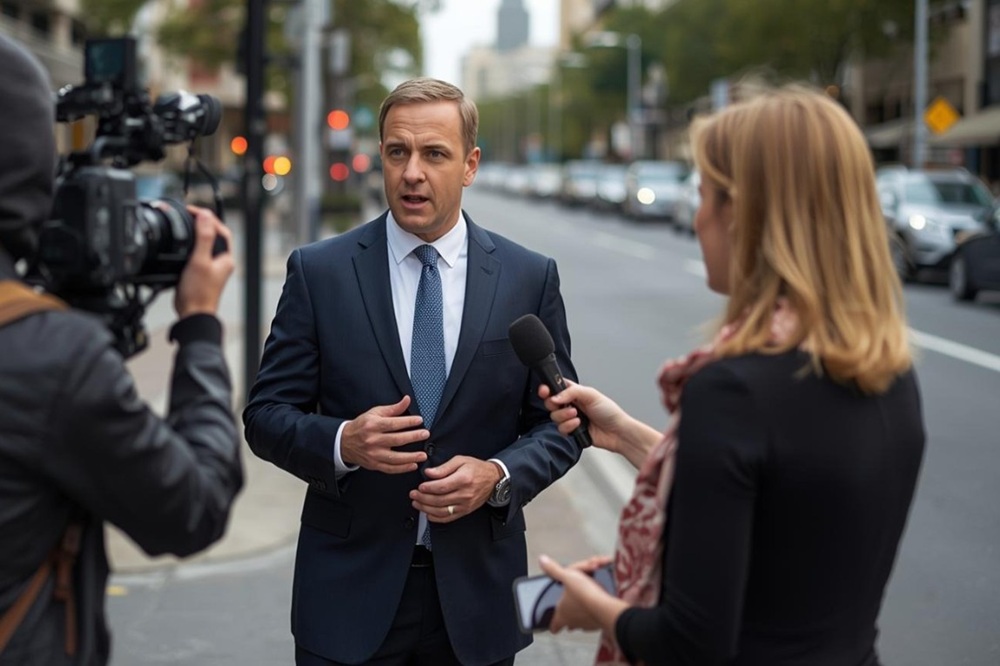
Getting your message out there can be a bit of a minefield and talking to the media requires a bit of know-how. This guide is here to help you understand media training and why it’s a smart move for your business. We’ll walk you through what you need to know to handle interviews like a pro.
Key Takeaways
- Understand what media training is and why it matters for Australian businesses.
- Learn how to get your main points across clearly and handle tough questions.
- Get familiar with the Australian media scene, including major outlets and regional differences.
- Know what to look for when picking a media training provider.
- Prepare for interviews by following a clear checklist and analyse your performance afterwards.
What is Media Training and Why is it Crucial for Australian Businesses?
Media training is a specialised form of instruction designed to prepare individuals and organisations for interactions with journalists and the broader media landscape. It equips spokespeople with the skills and confidence needed to communicate effectively, manage challenging questions, and represent their organisation positively. In Australia, where a vibrant and often fast-paced media environment exists, this training is not just beneficial; it’s a necessity for businesses aiming to control their narrative and protect their reputation.
The core purpose of media training is to ensure that when your organisation speaks to the media, it does so with clarity, accuracy, and strategic intent. This involves understanding how journalists work, what makes a story newsworthy, and how to deliver your key messages consistently. Without this preparation, even well-intentioned communications can be misinterpreted, leading to unintended consequences.
Consider the potential impact of a poorly handled media interaction:
- Reputational Damage: Negative press can significantly harm public perception and brand trust.
- Misinformation: Inaccurate reporting can spread false narratives about your business.
- Lost Opportunities: Failing to engage effectively can mean missing chances to highlight achievements or explain important initiatives.
- Crisis Escalation: In a crisis, poor communication can worsen the situation, leading to greater scrutiny and potential legal issues.
Media training provides a structured approach to these challenges. It helps you to:
- Develop clear, concise, and memorable key messages.
- Anticipate difficult questions and prepare thoughtful responses.
- Understand the nuances of different media formats, from online interviews to live television broadcasts.
- Maintain composure and professionalism under pressure.
For Australian businesses, engaging with the media is often unavoidable. Whether it’s a positive announcement, a response to an industry trend, or managing a crisis, how you communicate can shape public opinion and influence stakeholder confidence. Investing in media training is an investment in your organisation’s resilience and public image.
Key Objectives of Effective Media Training
Media training isn’t just about learning to speak to a reporter; it’s about mastering communication when it matters most. The primary goal is to equip you with the skills to represent your organisation confidently and accurately, no matter the situation. This involves several core components designed to build your capability and protect your reputation.
Crafting Your Core Message
Before you even think about facing a camera or a microphone, you need to know what you want to say. Effective media training focuses on developing clear, concise, and memorable key messages. These are the central points you want the audience to take away from any interaction. It’s about distilling complex information into easily digestible soundbites that align with your organisation’s objectives. You’ll learn techniques to weave these messages into your responses, even when faced with unexpected questions.
Handling Difficult Questions and Crisis Situations
Media interviews can sometimes be challenging, and crises are an inevitable part of business. Training prepares you for these moments. You’ll learn strategies for staying calm under pressure, deflecting inappropriate questions, and correcting misinformation without getting defensive. A significant part of this is understanding how to manage your responses during a crisis, ensuring you provide accurate information promptly while maintaining control of the narrative. This preparedness can make the difference between weathering a storm and succumbing to it.
Understanding Different Media Formats (Print, Broadcast, Digital)
Each media format has its own nuances. Training will help you understand these differences:
- Print Media: Focuses on detailed reporting, often requiring precise facts and figures. Your responses need to be well-reasoned and provide enough substance for a written article.
- Broadcast (TV & Radio): Emphasises brevity and impact. You’ll learn to deliver messages concisely, using clear language and engaging tone. Visuals and body language are also key for television.
- Digital Media: This includes online news sites, blogs, and social media. It’s often faster-paced and can involve direct engagement with audiences. Understanding how to communicate effectively across these platforms is vital.
Mastering these different formats ensures you can adapt your communication style to suit the medium, maximising the impact of your message and reaching the widest relevant audience.
The Australian Media Landscape: What You Need to Know
To engage effectively with the Australian media, you need a clear picture of how it operates. It’s a dynamic environment, and understanding its different facets will help you prepare better for any media interaction.
Major Australian News Outlets and Their Focus
Australia has a diverse media, with major players covering national and international news, alongside outlets that focus on specific regions or interests. You’ll find large media conglomerates like Nine Entertainment Co. (which owns Nine Network, 9Now, The Sydney Morning Herald, The Age, and others) and News Corp Australia (publisher of The Daily Telegraph, Herald Sun, The Australian, and numerous regional papers). The Australian Broadcasting Corporation (ABC) is our main public broadcaster, offering news across TV, radio, and online platforms, often with a focus on in-depth reporting and analysis. The Special Broadcasting Service (SBS) is the multicultural and multilingual broadcaster with a core purpose of reflecting Australia’s diverse society, fostering social cohesion and encouraging the exploration and respect for different cultures.
Specialised publications and broadcasters also cater to particular industries or demographics.
Knowing which outlet is likely to cover your story, and what their typical angle or focus is, is half the battle. For instance, a business story might be covered by the business sections of The Australian Financial Review, The Australian, or The Age, while a social issue might find a home on the ABC or a commercial television news program.
Navigating Regional vs. National Media
It’s important to distinguish between national and regional media. National outlets, as mentioned, have a broad reach across the country. Regional media, however, serves specific local communities. These can include local newspapers, radio stations, and even smaller television news operations. Engaging with regional media can be incredibly effective if your message or organisation has a strong local connection. Journalists in regional areas often have a deep understanding of their community and a loyal audience. Don’t underestimate the power of local media; it can often have a more direct impact on a specific community than national coverage.
Here’s a general overview of some key players:
| Media Outlet Type | Examples | Typical Focus |
| National Newspapers | The Australian, The Sydney Morning Herald, The Age, The Age, The Courier-Mail | National and international news, politics, business, in-depth analysis, opinion. |
| Commercial TV Networks | Nine Network, Seven Network, Network 10 | Current affairs, news bulletins, entertainment, sports. Often focus on breaking news and human interest stories. |
| Public Broadcaster | ABC (TV, Radio, Online) | National and international news, current affairs, documentaries, arts, culture, regional reporting. |
| Regional Media | Local newspapers (e.g., The Bendigo Advertiser), regional radio stations | Local news, community events, local politics, issues affecting the specific region. |
Understanding these distinctions allows you to tailor your approach, ensuring you’re speaking to the right audience through the right channels. A well-placed story in a regional paper can be just as impactful, if not more so, than a brief mention in a national publication, depending on your objectives.
Choosing the Right Media Training Provider in Australia
Selecting a media training provider is a significant decision for your organisation. You want a partner who understands the Australian media landscape and can equip your spokespeople with the skills to communicate effectively and confidently. Look for providers with a proven track record, ideally with trainers who have direct experience as journalists or media professionals in Australia. This background provides invaluable insight into how newsrooms operate and what journalists are looking for.
Consider the following when making your choice:
- Trainer Experience: Do the trainers have a background in Australian journalism, broadcasting, or public relations? Have they worked with organisations similar to yours?
- Customisation: Does the training program cater to your specific industry, challenges, and spokespeople’s experience levels? Generic training rarely hits the mark.
- Methodology: Does the provider use practical, hands-on exercises, including realistic interview simulations? Video recording and feedback are also key components for improvement.
- Scope of Services: Do they cover various media formats (print, radio, TV, digital) and offer training in crisis communications, message development, and presentation skills?
- Location and Flexibility: Can they deliver training at your premises, remotely, or at their own facilities across Australia?
The best providers will offer tailored programs that go beyond basic techniques, focusing on building genuine confidence and strategic communication skills.
It’s also wise to inquire about the trainer’s specific credentials and any testimonials or case studies they can share. Understanding their approach to crisis situations is particularly important, as this is often where media training proves its worth.
A good media training provider won’t just teach you how to answer questions; they’ll help you shape the narrative and ensure your organisation’s message is heard clearly and effectively, even under pressure.
Preparing for Your Media Interview: A Step-by-Step Checklist
Approaching a media interview without proper preparation is like heading into a crucial business negotiation without your figures. It’s a recipe for missed opportunities and potential missteps. Thorough preparation is the bedrock of a successful media interaction.
Here’s a practical checklist to ensure you’re ready to face the cameras or microphones with confidence:
- Understand the Objective: What is the primary goal of this interview? Is it to announce a new product, address a public concern, or share company news? Knowing the ‘why’ will shape your entire approach.
- Know Your Audience: Who are you speaking to? Consider the publication or broadcast’s typical readership or viewership. Tailor your language and examples to connect with them effectively.
- Identify Key Messages: What are the 2-3 most important points you need to convey? These should be clear, concise, and memorable. Practice articulating them in different ways.
- Anticipate Questions: Brainstorm potential questions, including the tough ones. Think about how you will answer them, focusing on your key messages. Prepare brief, factual responses for difficult topics.
- Research the Journalist: Understand the journalist’s background, previous work, and their publication’s angle. This can provide insights into their likely line of questioning.
- Prepare Your Talking Points: Create a concise list of your key messages and supporting facts. This isn’t a script, but a guide to keep you on track.
- Practice, Practice, Practice: Rehearse your answers, ideally with a colleague or media trainer using a camera or the video function on your mobile phone. Practice delivering your key messages clearly and confidently. Pay attention to your body language and tone.
- Logistics Check: Confirm the interview time, location (or platform for virtual interviews), and duration. Ensure you have any necessary materials or props ready.
A well-prepared spokesperson not only delivers their message effectively but also demonstrates respect for the media’s time and the audience’s attention. It shows you are serious about the topic and your organisation’s reputation.
Post-Interview Analysis and Continuous Improvement
Once the interview concludes, the work isn’t quite finished. Taking the time to review and reflect on your performance is a vital step in refining your media engagement skills. This isn’t about dwelling on minor slip-ups, but rather about identifying what went well and where opportunities for growth exist.
Consider the following points during your review:
- Message Clarity: Did you successfully convey your core messages? Were they clear, concise, and easy for the audience to understand?
- Response Effectiveness: How did you handle the questions posed? Were your answers direct and on-point, or did you stray from your intended message?
- Demeanour and Tone: How did you present yourself? Was your tone appropriate for the situation – confident, calm, and professional?
- Handling Difficult Questions: If challenging or unexpected questions arose, how did you respond? Did you remain composed and steer the conversation back to your key points?
Watching recordings of your interviews, if available, can provide invaluable insights. It allows you to see yourself as the audience does, highlighting body language, vocal patterns, and verbal responses that might not be apparent in the moment. This objective perspective is key to identifying specific areas for improvement.
The media landscape is always shifting, and so too should your approach. Consistent analysis and a commitment to learning from each interaction will build your confidence and effectiveness over time. Think of each interview as a learning experience, a chance to hone your communication strategy.
Here’s a simple way to track your progress:
| Interview Date | Key Message Delivery (1-5) | Handling Difficult Questions (1-5) | Overall Confidence (1-5) | Areas for Improvement |
| [Date] | [Score] | [Score] | [Score] | [Notes] |
| [Date] | [Score] | [Score] | [Score] | [Notes] |
By regularly engaging in this process, you move beyond simply participating in media interviews to actively mastering them. This dedication to continuous improvement ensures you are always presenting your best self and your organisation effectively.
Real-World Examples: Media Training Successes and Failures in Australia
Looking at how others have handled media interactions can offer some serious lessons. We’ve seen plenty of instances in Australia where good preparation made all the difference, and conversely, where a lack of it led to less-than-ideal outcomes.
Consider a situation where a company faced unexpected negative press. Those who had invested in media training were able to respond quickly and clearly, sticking to their key messages and addressing concerns directly.
This often involved a spokesperson who had practiced handling tough questions and understood how to pivot back to their core points. This preparedness minimised reputational damage and maintained public trust.
On the flip side, there are examples of organisations caught off guard. Without a clear strategy or practiced responses, spokespeople might become flustered, give off-the-cuff answers that are later misconstrued, or even say things that worsen the situation. This often happens when individuals haven’t had the chance to simulate difficult interview scenarios or develop a strong understanding of their organisation’s stance on sensitive topics.
Here are a few common scenarios observed:
- Success: A tech startup, anticipating questions about data privacy, had its CEO participate in mock interviews focusing on security protocols and user protection. When a minor breach occurred, the CEO calmly explained the measures in place, reassuring customers and investors.
- Failure: A regional council, unprepared for questions about a controversial development project, had a councillor give an emotional and defensive response that was widely reported, leading to significant public backlash and delays.
- Success: A non-profit organisation, preparing for a campaign launch, trained its director on how to articulate the organisation’s mission and impact, even when faced with questions about funding. The resulting media coverage was overwhelmingly positive, highlighting their work.
The difference often comes down to practice and a clear message. Organisations that treat media interactions as a performance rather than a conversation tend to fare better. This means understanding your audience, knowing your key points, and rehearsing how you’ll deliver them under pressure.
These real-world examples highlight that media training isn’t just about looking good on camera; it’s about strategic communication. It equips you with the tools to manage your organisation’s narrative effectively, turning potential challenges into opportunities to demonstrate transparency and competence.
Your Next Steps in Media Engagement
So, you’ve read through this guide, and hopefully, you’re feeling a bit more ready to face the cameras and microphones. It’s not about becoming someone you’re not, but about showing up as your best self when it counts. Think of media training as building a skill, like learning to ride a bike or cook a decent meal. It takes a bit of practice, some good advice, and maybe a few wobbles along the way. But with the right approach and a bit of commitment, you can definitely get comfortable and confident talking to the media. The key is to find a training that fits what you need, whether it’s handling tough questions or just getting your main points across clearly. Give it a go – you might be surprised at what you can achieve.
Frequently Asked Questions
What exactly is media training, and why should I bother with it for my Australian business?
Media training is like a practice run for talking to journalists and news reporters. It helps you learn how to share your message clearly and confidently, even when things get a bit tricky. For Australian businesses, it’s super important because it makes sure you look good and sound smart when you’re in the spotlight, helping people trust and understand what you do.
How can media training help me handle tough questions or unexpected problems?
Good media training teaches you strategies for dealing with questions that are hard to answer or when something bad happens. You’ll learn how to stay calm, stick to your main points, and avoid saying anything you might regret. It’s all about being prepared so you don’t get caught off guard.
What’s the difference between talking to a newspaper reporter and a TV crew?
Each type of media is different. Talking to a newspaper is usually about your words, while TV involves how you look and sound on camera. Radio is all about your voice. Media training will show you how to adjust your approach for each, making sure your message gets across effectively no matter the platform.
How do I pick the best media training program for me in Australia?
When choosing a training provider, look for ones with experienced trainers who understand the Australian media scene. Check if they offer hands-on practice with real-life scenarios and feedback. It’s also good if they can tailor the training to your specific needs and industry. Reading reviews can also give you a good idea.
What should I do right after I finish a media interview?
After an interview, it’s wise to jot down notes about how you think it went. Think about the questions asked, how you answered, and if you got your key messages across. This helps you learn from the experience and get even better for next time. Sometimes, your trainer might also provide feedback.
Can media training really help someone who’s a bit shy or nervous about public speaking?
Absolutely! A big part of media training is building your confidence. You’ll learn techniques to manage nerves, speak clearly, and present yourself in a way that feels comfortable. The practice sessions are designed to make you feel more at ease, even if you’re not naturally outgoing.